Original Document Reference
Click on the pages below to view the original scans from the Bishnupriya Manipuri Grammar book.
বিষ্ণুপ্রিয়া মণিপুরী ঠারে আস্তা অধ্যায়হান পাকরিক
This article is based on and elaborated from the book
“BISHNUPRIYA MANIPURI BYAKARANA
(Grammar in Bishnupriya Manipuri Language),
Mathura Singha” by Uttam Singha.
Guide: 'u' as in put, 'ei' as in play, 'g' is always hard.
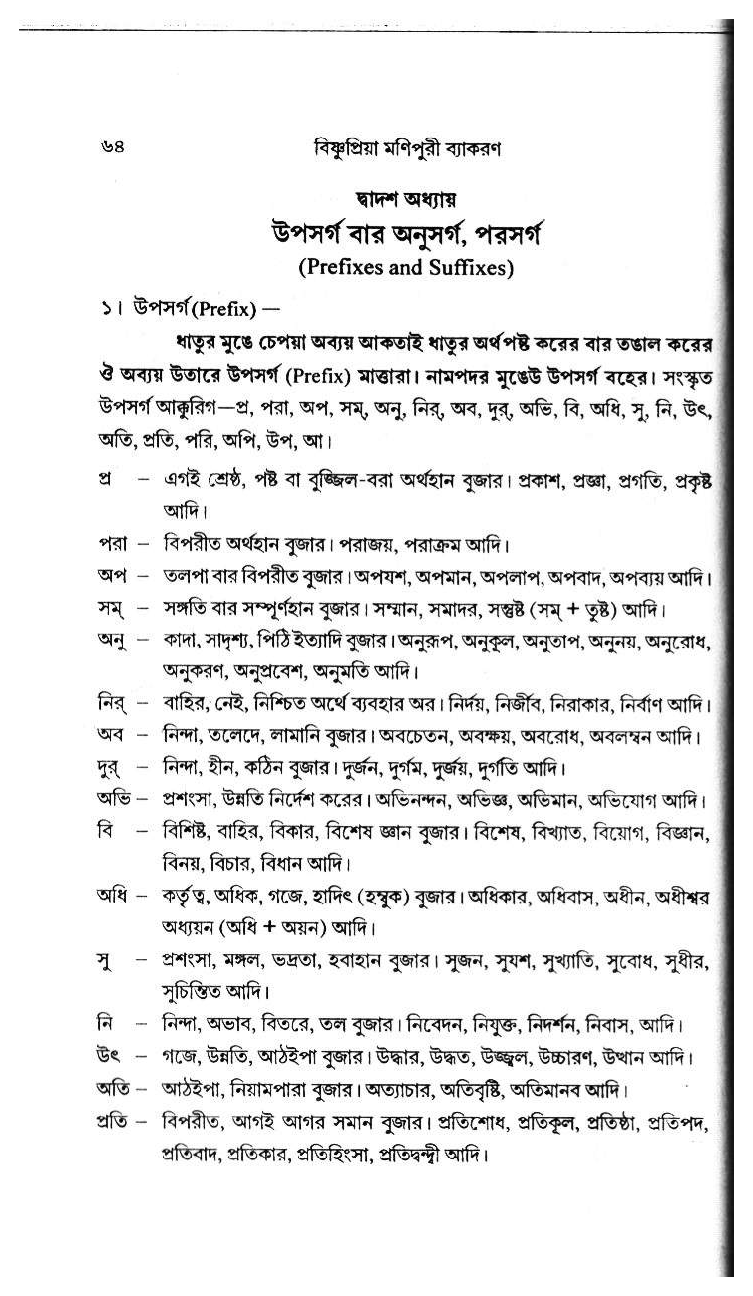
In Bishnupriya Manipuri, a Prefix is a small word-part added to the beginning of a root word to change its meaning or make it more specific.
| Prefix (Romanized) | Original Script | Meaning/Usage | Examples |
|---|---|---|---|
| Pra | প্র | Greatness / Clarity | Pragati (Progress) |
| Para | পরা | Opposite / Reverse | Parajay (Defeat) |
| Apa | অপ | Bad / Downward | Apaman (Insult) |
| Dur | দুর্ | Difficult / Evil | Durjan (Bad person) |
| Su | সু | Good / Well | Sukhyaati (Fame) |
| Prefix | Romanization | English Meaning / Usage | Examples |
|---|---|---|---|
| প্র | Pra | Superior, Clear, or Intelligent | প্রকাশ (Prakash), প্রজ্ঞা (Pragya), প্রগতি (Pragati) |
| পরা | Para | Opposite or Against | পরাজয় (Parajay), পরাক্রম (Parakram) |
| অপ | Apa | Downward or Opposite | অপযশ (Apayash), অপমান (Apaman), অপবাদ (Apabad) |
| সম্ | Sam | Harmony, Together, or Complete | সম্মান (Samman), সমাদর (Samadar), সন্তুষ্ট (Santushta) |
| অনু | Anu | After, Likeness, or Behind | অনুরূপ (Anurup), অনুকূল (Anukul), অনুতাপ (Anutap) |
| নির্ | Nir | Outside, Absence, or Certainty | নির্দয় (Nirday), নির্জীব (Nirjib), নিরাকার (Nirakar) |
| অব | Aba | Scorn, Beneath, or Downward | অবচেতন (Abachetan), অবক্ষয় (Abakhay), অবরোধ (Abarodh) |
| দুর্ | Dur | Bad, Base/Low, or Difficult | দুর্জন (Durjan), দুর্গম (Durgam), দুর্জয় (Durjay) |
| অভি | Abhi | Praise, Progress, or Towards | অভিনন্দন (Abhinandan), অভিজ্ঞ (Abhigya), অভিমান (Abhiman) |
| বি | Bi | Special, Outside, or Change | বিশেষ (Bishesh), বিখ্যাত (Bikhata), বিজ্ঞান (Bigyan) |
| অধি | Adhi | Authority, More, or Above | অধিকার (Adhikar), অধীন (Adhin), অধীশ্বর (Adhishwar) |
| সু | Su | Praise, Good, or Auspicious | সুজন (Sujan), সুযশ (Suyash), সুখ্যাতি (Sukhyati) |
| নি | Ni | Scorn, Lack, Inside, or Below | নিবেদন (Nibedan), নিযুক্ত (Niyukta), নিবাস (Nibas) |
| উৎ | Ut | Upward, Progress, or High | উদ্ধার (Uddhar), উজ্জ্বল (Ujjwal), উচ্চারণ (Uccharan) |
| অতি | Ati | Superior or Excessive | অত্যাচার (Atyachar), অতিবৃষ্টি (Atibrishti), অতিমানব (Atimanab) |
| প্রতি | Prati | Opposite or Equality/Each | প্রতিশোধ (Pratishodh), প্রতিকূল (Pratikul), প্রতিবাদ (Pratibad) |
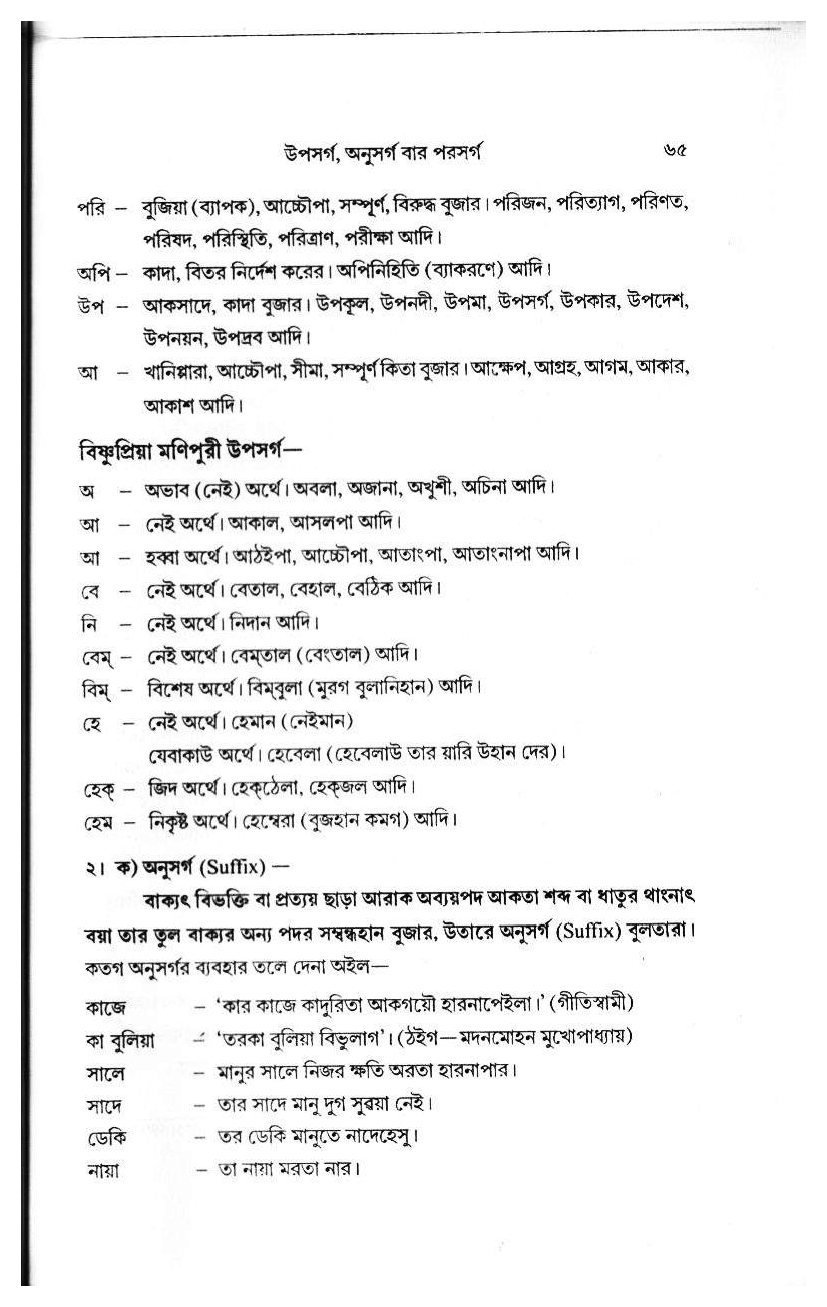
| পরি | Pari | Fully, All around, Completion | পরিবর্তন (Paribartan), পরিষ্কার (Parishkar), পরিমণ (Pariman) |
| অপি | Api | Addition, Even, or Hidden | অপিনিহিতি (Apinihiti), অপিধান (Apidhan) |
| উপ | Upa | Near, Secondary, or Small | উপকূল (Upakul), উপগ্রহ (Upagraha), উপবন (Upaban) |
| আ | A | Up to, Limit, or Slightly | আজীবন (Ajiban), আদান (Adan), আরক্ত (Arakta) |
Unlike the Sanskrit-derived ones above, these are unique to the native tongue:
| উপসর্গ (Prefix) | Romanization | English Meaning / Usage | উদাহরণ (Examples) |
|---|---|---|---|
| অ | A | Absence / Lack of / Not | অবলা (Abala), অজানা (Ajana), অখুশী (Akhushi) |
| আ | A | None / Absence | আকাল (Akal), আসলপা (Asalpa) |
| আ | A | Good / Excellent / Superior | আটইপা (Ataipa), আচৌপা (Achoupa), আতাংপা (Atangpa) |
| বে | Be | None / Lack of | বেতাল (Betal), বেহাল (Behal), বৈঠক (Baithak) |
| নি | Ni | None / End of | নিদান (Nidan) |
| বেম্ | Bem | None / Without | বেমতাল/বেংতাল (Bemtal/Bengtal) |
| বিম্ | Bim | Special / Specific sense | বিমবুলা (Dizziness) |
| হে | He | None / Absence | হেমান (Heman - without pride/honor) |
| হে | He | At that time / Since then | হেবেলা (Hebela - at that time) |
| হেক্ | Hek | Stubbornness / Insistence | হেকঠেলা (Hekthela), হেকজল (Hekjal) |
| হেম | Hem | Inferior / Bad / Low quality | হেম্বেরা (Hembera - one with low intelligence) |
These function like English prepositions (with, for, like) but come after the noun.
| Suffix (অনুসর্গ) | English Meaning / Use | Example Sentence (Bishnupriya Manipuri) | English Translation of Example |
|---|---|---|---|
| কাজে (Kaje) | For / For the sake of | কার কাজে কাদুরিতা আকগৈয়া হারনাপেইলা। (- গীতিস্বামী) | No one understood who I was weeping for? (-Gitiswami) |
| কা বুলিয়া (Ka bulia) | For / Because of | তরকা বুলিয়া বিভুলাগ। (ঠইগ - মদনমোহন মুখোপাধ্যায়) | I am wandering for your sake. (Thoigo - Madanmohan Mukherjee) |
| সালে (Sale) | For / In favor of | মানুর সালে নিজর ক্ষতি করনানি। | One should not harm oneself for the sake of others. |
| সাদে (Sade) | Like / Similar to | তার সাদে মানু দুগ সুৱয়া নেই। | There are no two people like him (he is unique). |
| ডেকি (Deki) | Like / As | তর ডেকি মানুতে নাদেহেসু। | I haven't seen anyone like you. |
| নায়া (Naya) | Without | তা নায়া মরতা নার। | (I) cannot survive without him. |
| Post-position | Romanization | Usage / Meaning | Example Sentence | English Translation |
|---|---|---|---|---|
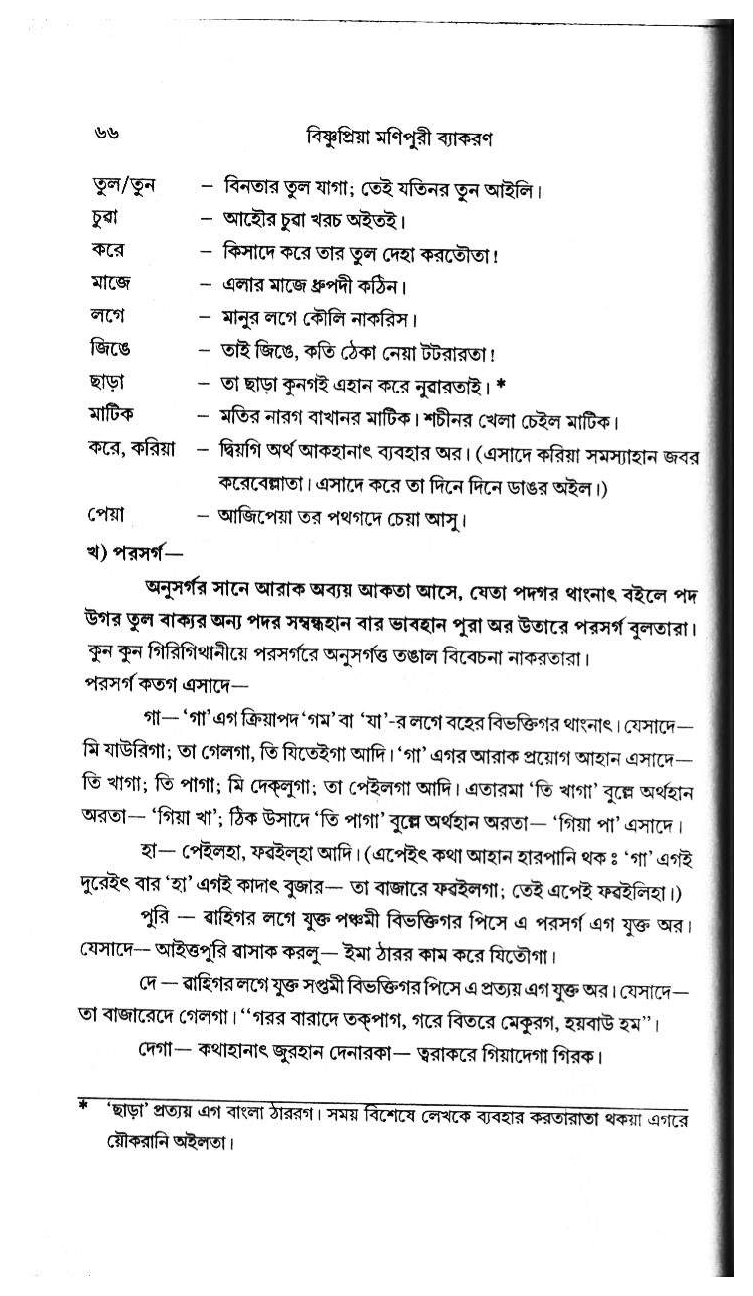
| তুল/তুন | Tul' / Tun' | With | বিনতার তুল যাগা; তেই যতিনর তুন আইলি। | Go with Vinta; she came with Jatin.. |
| চুৱা | Chuba | About/Aprox. | আহৌর চুৱা খরচ অইতই। | It will cost about a hundred rupees. |
| করে | Kare | How | কিসাদে করে তার তুল দেহা করতৌতা! | How will I meet him! |
| মাজে | Maje | In / Amidst | এলার মাজে দ্রুপদী কঠিন। | Among songs, Draupadi is difficult. |
| লগে | Lage | With | মানুষ লগে কৌলি নাকরিস। | Do not quarrel with people. |
| জিঙে * | Jinge | The Emphatic/Exclamatory | তাই জিঙে, কতি ঠেকা নেয়া টটরারতা! | He is talking even needlessly! |
| ছাড়া | Chhara | Without / Except | তা ছাড়া কুনগই এহান করে নুৱারতাই। | Who else but him can do this. |
| মাটিক | Matik | Worthy | মতির নারগ বাখানর মাটিক। শচীনর খেলা চেইল মাটিক! | Moti's voice is worth praising! Sachin's game is worth watching! |
| করে, করিয়া | Kare, Kariya | Having done (Participial) | এসাদে করিয়া সমস্যাহান জবর করবেল্লাতা। এসাদে করিয়া তি দিনে দিনে ডাঙর অইল | (Both words are used in the same sentence with the same meaning.) Having done so, the problem became serious. This is how he grew up day by day. |
| পেয়া | Peya | Up to / Until | আজি পেয়া তর পথগদে চেয়ে আসু। | Until today, I am waiting on his path. |
| Function | English Equivalent | Bishnupriya Manipuri Context |
|---|---|---|
| Comparison | Than | Used to compare two people or things (A > B). |
| Emphasis | Even / Just | Used to highlight an action or state, often expressing emotion. |
| Selection | Out of / Among | Sometimes used to pick one from a group (e.g., "Among these, this is best"). |
Unlike suffixes, there are some prepositions or markers that attach to the end of a word to establish its relationship with a verb and make a meaningful, complete sentence. These are unique particles added after a word to indicate direction or relationship. Some language experts do not differentiate these prepositions from suffixes.
-Ga (গা): Indicates movement away or distance.
Example: Mi jauriga (I am going away).
-Ha (হা): Indicates movement towards or proximity.
Example: Tei epei fouoiliha (She arrived here).
-De (দে): Used to indicate "through" or "via".
Example: Ta bazarede gelga (He went via the market).
| Post-position | Usage / Meaning | Example Sentence | English Translation |
|---|---|---|---|
| গা (Ga) | Added to roots like 'Gam' (Go) or 'Ya' (Go) | মি যাউরিগা; তা গেলগা | I am going; He has gone |
| হা (Ha) | Indicates arrival or being near | পেইলাহা, ফৱইলহা | Arrived; Reached |
| পুরি (Puri) | Follows the 5th case (Ablative) marker | আইতপুরি ৱাসাক করলু | From today, I promise. |
| দে (De) | Follows the 7th case (Locative) marker | তা বাজারেদে গেলগা | He went towards the market. |
| দেগা (Dega) | Used for emphasis or request | ত্বরাকরে গিয়া দেগা গিরক | Please go quickly, sir |
| Post-position | Romanization | Usage / Meaning | Example Sentence | English Translation |
|---|---|---|---|---|
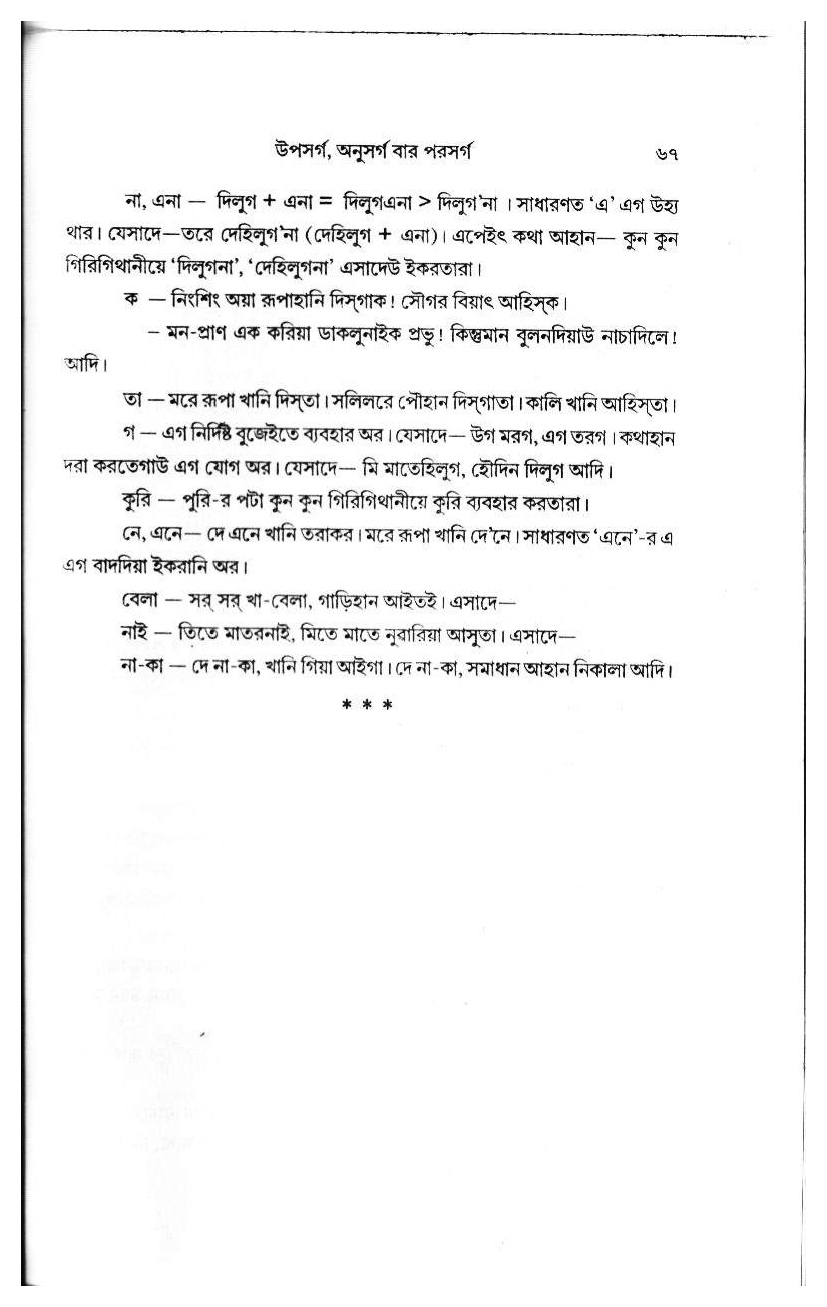
| না, এনা | Na, Ena | Emphasis / Connective | দিলুগ + এনা = দিলুগ’না। | Give (emphasized). |
| ক | Ka | Goal / Direction | সৌগর বিয়াৎ আহিসক। | Please come to my child's wedding. |
| তা | Ta | To reinforce a request or proposal | কালি খানি আহিসতা। | Please come tomorrow! |
| গ | Ga | Specificity (Singular) | উগ মরগ, এগ তরগ। | That mine, this yours. |
| কুরি/পুরি | Kuri / Puri | From / Since | পুরির পটা কুন কুন গিরিগিথানীয়ে কুরি ব্যবহার করতারা। | From today |
| নে, এনে | Ne, Ene | Instrument / With | মরে রুপা খানি দে’নে। | Give me some money. |
| বেলা | Bela | Time / While | সর্ সর্ খা-বেলা, গাড়িহান আইতই। | Eat quickly, the car will be here soon. |
| নাই | Nai | Negation / Not | তিতে মাতরনাই, মিতে মাতে নুৱারিয়া আসুতা। | He did not speak; I am unable to speak. |
| না-কা | Na-Ka | Give it / Leave it | দে না-কা, খানি গিয়া আইগা। | Give it, go there first. |
See how Prefixes and Suffixes are used in daily conversation. Pay attention to how the root word changes.
Ti be-thik katha maturi.
তি বে-ঠিক কথা মাতুরি।
"You are saying the wrong thing."
Uses Be- (Wrong/Not) + Thik (Correct)Ta bazare-de gel-ga.
তা বাজারে-দে গেল-গা।
"He went away via the market."
Uses -de (via) and -ga (away)Tar sade manu aga nei.
তার সাদে মানু আগ নেই।
"There is no one else like him."
Uses Sade (Like/Similar to)Aji-peiya mi epei asu.
আজি-পেয়া মি এপেই আসু।
"I have been here until today."
Uses Peiya (Until/Up to)Ta ega su-jan mango.
তা এগ সু-জন মানুগ।
"He is a very good/gentle person."
Uses Su- (Good) + Jan (Person)Click on the pages below to view the original scans from the Bishnupriya Manipuri Grammar book.
ধাতুর মুঙে চেপয়া অব্যয় আকতাই ধাতুর অর্থপষ্ট করের বার তঙাল করের ঔ অব্যয় তারে উপসর্গ (Prefix) মাতারা। সংস্কৃত উপসর্গ ২০গ— প্র, পরা, অপ, সম্, অনু, নির্, অব, দুর্, অভি, বি, অধি, সু, নি, উৎ, অতি, প্রতি, পরি, অপি, উপ, আ।
অ (অবেলা), আ (আকাল), বে (বেঠিক), নি (নিদান), হেক (হেকটেলা), হেম (হেম্মরা) আদি।
বাক্যাং বিভক্তি বা প্রত্যয় ছাড়া আরাক অব্যয়পদ আকতা শব্দ বা ধাতুর থাংনাং বয় তার তুল বাজার অন্য পদর সম্বন্ধহান বুজার, তারে অনুসর্গ বুলতারা।
অনুসর্গ: কাজে, সালে, সাদে, ডেক্নি, নায়া, তুল/তুন, চুবা, মাজে, লগে, জিঙে, ছাড়া, মাটিক, পেয়া আদি।
পরসর্গ: গা (মি যাউরিগা), হা (পেইলহা), পুরি (আইওপুরি), দে (বাজারেদে), দেগা (গিয়া দেগা)।
*Transcribed from the original grammar document.